20
ERC-20 Mint
Exact base-unit math, verified ABIs, minter roles, EVM nonces, receipts, and supply reconciliation.
ERC-20 architecture →A practical developer reference for ERC-20, SPL, NFT, metadata, automation, signing, retry safety, and mainnet operations.
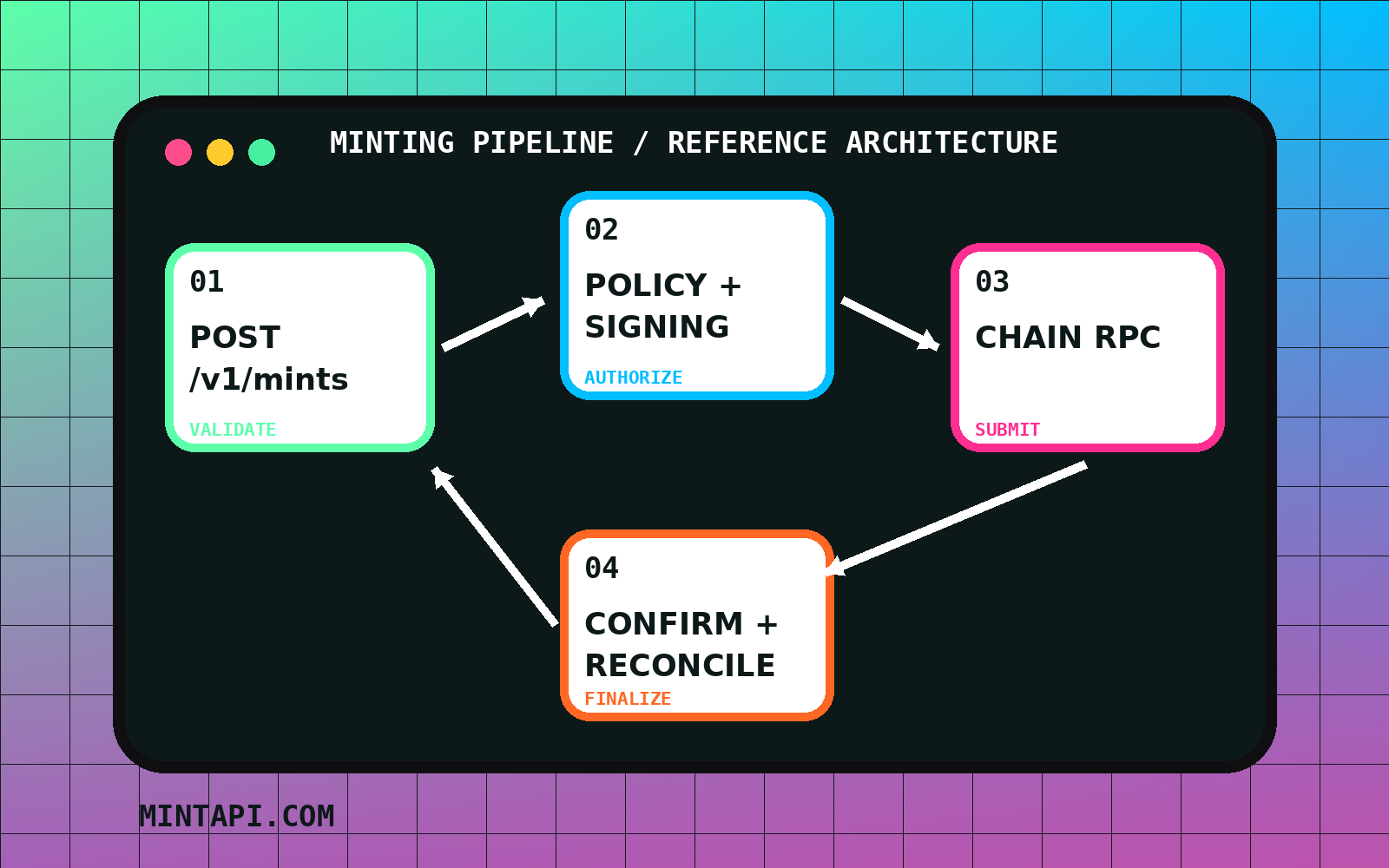
One operation, six controlled stages
A production interface must preserve intent and evidence while moving through asynchronous chain infrastructure.
Resolve the asset, network, recipient, amount, metadata, and request identity.
Apply tenant, asset, supply, recipient, and business policy.
Create the durable operation and reserve the idempotency key first.
Use a restricted signing boundary that decodes and checks the transaction.
Broadcast once, retain the transaction identity, and handle provider ambiguity.
Confirm chain evidence, verify balances or ownership, and publish status.
Choose the asset model
The shared API lifecycle can be consistent without flattening contract, account, metadata, and authority differences.
Exact base-unit math, verified ABIs, minter roles, EVM nonces, receipts, and supply reconciliation.
ERC-20 architecture →Mint accounts, associated token accounts, Token Programs, blockhash expiry, and commitment policy.
SPL architecture →Unique asset keys, metadata versions, token IDs, ownership evidence, and delivery states.
NFT architecture →Per-ID supply, quantities, URI substitution, receiver checks, and item-level reconciliation.
Batch mint guide →Implementation-neutral contract
The caller declares intent. The service returns an operation ID immediately, owns asynchronous processing, and exposes chain evidence without pretending every network is identical.
POST /v1/mints HTTP/1.1
Host: api.yourdomain.example
Authorization: Bearer <token>
Idempotency-Key: 5db1d9ee-8f64-4b33-9b0b-62a8d4f7f9e0
Content-Type: application/json

{
  "asset_id": "rewards-usd-v1",
  "network": "solana-devnet",
  "standard": "spl",
  "recipient": "7QhV...xP9",
  "amount": "125.00",
  "amount_unit": "display",
  "external_reference": "reward_84721"
}Production controls
Reliability and security are part of token economics because a duplicate or unauthorized request can change real supply.
Canonical request hashes, unique constraints, resumable states, transaction identity, and an explicit review path for ambiguous outcomes.
Idempotency guide →Keep private keys away from web processes and let the signer independently enforce chain, asset, function, amount, and recipient policy.
Security blueprint →Verify deployed code, authority, RPC capacity, fee funding, metadata, confirmation policy, and stop controls before production enablement.
Launch checklist →Mint Architecture Journal

A product-focused decision framework for fungible supply, unique assets, multi-token collections, chain constraints, metadata, custody, and operations.
Read guide →
A defense-in-depth security model for minting APIs, including authentication, object authorization, signer isolation, request limits, webhooks, and incident controls.
Read guide →
A practical metadata architecture for on-chain references, off-chain documents, media validation, versioning, hashes, and controlled updates.
Read guide →Frequently asked questions
MintAPI.com is an independent developer reference for designing token minting APIs. It explains architecture, standards, request models, signing, retries, confirmation, metadata, and security; it does not advertise a live hosted minting endpoint.
A token minting API converts an authorized application request into a durable workflow that validates intent, constructs a chain transaction, obtains signatures, submits once, confirms the result, and reconciles on-chain state.
A shared operation resource can normalize intent and status, but chain-specific details must remain explicit. ERC-20 uses contract calls and EVM account nonces, while SPL minting uses mint accounts, token accounts, authorities, and Solana transaction rules.
Require an idempotency key, bind it to a canonical request hash and authenticated scope, create the operation before external side effects, and reconcile ambiguous submissions before constructing another transaction.
No. Deployment or mint-account creation defines the asset and its authorities. Minting usually creates supply or assigns an item under an already deployed contract, program, or mint account.
Build from explicit contracts
Define assets, authorities, idempotency, confirmation, and reconciliation before connecting a production signer.